
Beyond Jodeci: How DeVante Swing Quietly Shaped the Sound of R&B For Generations

Most know DeVante Swing as the sultry-eyed, ponytailed maestro behind Jodeci’s soulful seduction and rugged edge. But behind the sunglasses was a songwriter, producer, and visionary who saw what no one else did—before the Grammys, before the platinum plaques, before the world even knew their names.
With Swing Mob, later known as Da Bassment Cru, DeVante didn’t just assemble talent—he created a talent ecosystem. It was intense, often volatile, but undeniably brilliant. Inside that tightly wound creative chamber were the sparks of what would become some of the most influential sounds in modern R&B and hip hop.
Timbaland. Missy Elliott. Ginuwine. Aaliyah. Static Major.
These aren’t just names—they’re blueprints. Pillars. Culture-shapers. And every single one of them was either discovered, developed, or deeply influenced by the mind of DeVante Swing.
The Architect Behind the Vibe
From Jodeci to Genius
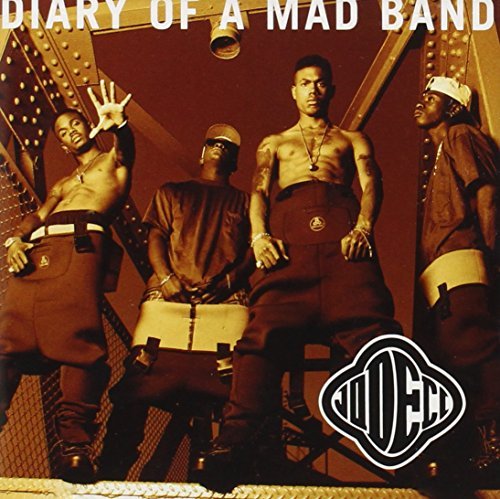
Before the Swing Mob era, DeVante Swing had already proven himself. As the sonic force behind Jodeci, he crafted a new blueprint for R&B: gospel-rooted vocals laced with hip hop grit. Their debut album Forever My Lady didn’t just break records—it broke molds.
But DeVante wasn’t content with just being a hitmaker. He saw himself as an architect. And his vision extended beyond Jodeci.
A Signature Sound Ahead of Its Time
You may have heard DeVante Swing’s fingerprints in music and not even realized it. That dark, churchy, sensual blend of emotion and edge? That’s the DeVante sound. It’s undeniable.
Take H-Town’s “Part Time Lover”—listen closely and it sounds like a Jodeci deep cut. That’s not coincidence. That’s DeVante Swing on the boards. This is the sound. Heavy harmonies over moody chords. Hip hop drums under soulful cries.
That same sonic DNA continues to echo through today’s music. Artists like Drake (“How Bout Now”) and Megan Thee Stallion (“Plan B”)are still sampling and referencing DeVante’s original formulas. Why? Because it still knocks. It still moves people.
DeVante taught this sound to Timbaland, who in turn would use it as the bedrock for the careers of Aaliyah, Ginuwine, Missy Elliott, and even Justin Timberlake. The emotion. The bounce. The minimalism. All rooted in that early blueprint crafted by DeVante Swing.
Enter Da Bassment: Swing Mob as a Creative Incubator
The Vision Behind the Compound
In the early ’90s, DeVante pulled together a group of hungry, largely unknown artists and producers under the name Swing Mob (later known as Da Bassment Cru). Many of them moved into a house in Rochester, New York—a sort of creative bootcamp-meets-laboratory. No distractions. No big budgets. Just ideas, pressure, and tape decks. Think Making Da Band without the cameras.
It was far from glamorous. The conditions were famously difficult. But the output? Historic.
An Unfiltered Sound Factory
There were no egos in Da Bassment—only ambition. Artists like Timbaland were learning how to craft drum patterns that felt like heartbeats. Missy Elliott was penning hooks and melodies that would eventually dominate radio for decades. Ginuwine was working on his tone, and Static Major was sharpening his pen.
It was survival of the most creative—and DeVante was the catalyst behind it all.
Discovering Legends Before the World Knew Their Names

DeVante Swing didn’t just recruit talent—he cast vision. Every member (with the exception of Aaliyah) of what would eventually become known as The Superfriends—Timbaland, Missy Elliott, Ginuwine, Aaliyah, and Static Major—was handpicked and heavily influenced through his early mentoring and creative direction.
Each one had a distinct role. Timbaland, the producer. Missy Elliott and Static Major, the pens. Ginuwine and Aaliyah, the voices. Together, they weren’t just collaborators—they were an ecosystem birthed from DeVante’s original blueprint at Da Bassment.
Missy Elliott: The Writer Who Refused to Fit a Mold

Before she was a global icon, Missy Elliott was part of a girl group called Sista, and she was laser-focused on one goal: meeting DeVante Swing. She and her group were so determined, they dressed up like Jodeci, pulled up to one of their concerts, and made sure they got noticed.
That bold move worked. Missy ended up meeting Mr. Dalvin of Jodeci, who was impressed enough to bring her to DeVante. When she sang for him, it was undeniable. He liked what he heard—and just like that, Missy and Sista were in the circle.
Once inside Swing Mob, Missy was a quiet force, but it didn’t take long for her originality to command attention. DeVante pushed her into songwriting, into experimentation, into collaboration. Her sense of melody, rhyme, and structure was refined and elevated in those early days of grinding it out with no budget—just bars and belief.
What Missy went on to do—become a Rock & Roll Hall of Famer, a Songwriters Hall of Famer, a cultural innovator, and creative leader—is the direct result of that early trust DeVante placed in her.

Timbaland: The Student Turned Sonic Architect

Before becoming one of the most revolutionary producer-songwriters of all time, Timbaland was in the lab under DeVante’s wing—literally sleeping on studio floors, absorbing everything. But he almost didn’t get that chance.
When Missy was brought into the Swing Mob fold, DeVante had someone else in mind to produce her music—none other than Al B. Sure!. But Missy pushed back. She knew exactly who her sound needed. “Nah, my man has to do work on this too,” she told DeVante. “I love Al, but Tim fits with what I want to do.”
DeVante could’ve said no. A lot of industry heavyweights would have. But to his credit, he listened. He brought Timbaland into the circle—and that single decision ended up shifting the entire landscape of R&B and hip hop.
His signature off-kilter rhythms and syncopated drum patterns didn’t happen by accident. They were crafted, tested, and sharpened inside Da Bassment’s four walls.
DeVante taught him how to produce with feeling—not just with tools. Timbaland himself has acknowledged DeVante as the first person to truly believe in him as a producer.

Ginuwine: The Voice That Cut Through the Noise

Ginuwine wasn’t just a smooth vocalist—he was the R&B male voice of the late ’90s and early 2000s. His range, tone, and emotional delivery were unique, and DeVante knew how to shape it.
Before he and Static Major created the bedroom anthem “Pony”, Ginuwine was hustling his way into a shot. After hearing that DeVante Swing, MC Hammer, and Boyz II Men were coming to town, he made it his mission to find where they were staying. He tracked them down at a hotel and managed to get inside—eventually spotting DeVante surrounded by fans in a ballroom.
Ginuwine stood there quietly until DeVante took notice and asked, “Can you sing?” Ginuwine stepped to the piano and broke into Jodeci’s “Stay”—the room went wild. DeVante grabbed him immediately and introduced him to his manager, saying he was starting something new: Swing Mob.
A few months later, Ginuwine packed up and moved to New York, where he joined the Bassment collective and met Timbaland, Missy, and the rest of the crew. He came in with raw talent—but it was that high-pressure, no-excuses environment that gave him his edge. The polish. The grit. The urgency.

Static Major: The Pen Behind the Feel

Before shaping the sound of modern R&B, Static Major was one-third of the group Playa, best known for their timeless 1998 track “Cheers 2 U.” The harmonies, the writing, the feel—it was all Static. And of course, the production came from fellow Da Bassment alum, Timbaland and Smoke (another member of the group Playa).
The group first met DeVante Swing in Louisville, Kentucky after a Jodeci concert in the early ’90s. Determined to be heard, they found a security guard who let them near the tour buses. That’s where they ran into Mr. Dalvin, who brought DeVante over. Playa sang on the spot—and impressed him enough to exchange numbers. DeVante memorized the phone number and would often call to hear them sing. He ultimately invited them to New Jersey once Swing Mob was in motion.
While Playa had their moment, Static’s true genius was behind the scenes. He (along with Missy and Timbaland) co-wrote much of Aaliyah’s post-R. Kelly catalog and later delivered hits like Lil Wayne’s “Lollipop” and even recently with Drake. His melodies were conversational, emotional, and ahead of their time.
Until his untimely passing, Static remained one of the most respected pens in the game—and it all started under DeVante Swing’s direction.

Aaliyah: The Icon Refined by the Crew

While Aaliyah didn’t live in the house or become a member of the Swing Mob, her career after R. Kelly was made possible by those who did. She admitted to having a crush on Devante growing up, and it appears to have been influential in her decision to work with the Cru. When her team tapped Timbaland and Missy Elliott for her sophomore album, they were bringing the spirit of Da Bassment into the mainstream.
DeVante may not have produced her hits directly, but he crafted and groomed the talent who defined her sound. One in a Million wasn’t just an album—it was a reintroduction. A perfect blend of minimalism, sensuality, and futuristic R&B that wouldn’t exist without the crew DeVante molded.

Tweet, Magoo & Stevie J: The Supporting Cast That Helped Shape the Vibe
While not always front and center, artists like Tweet, Magoo, and Stevie J added crucial threads to the Swing Mob tapestry.
Tweet brought a softness and soul that would later blossom on her solo work like “Oops (Oh My)”—but her roots in Da Bassment helped develop her stripped-down, emotionally honest vocal style.
Magoo, Timbaland’s rap partner, offered a laid-back counterbalance to the experimental chaos of early Timbaland production.
And Stevie J, long before his TV fame, was one of DeVante’s early production protégés—learning the ropes alongside future legends and later shaping the Bad Boy sound.
Beyond the Bassment: The Superfriends’ Ripple Effect
DeVante Swing didn’t just build a crew—he built infrastructure. And through that network, an entirely new generation of creators emerged. The Superfriends would go on to influence artists who are icons in their own right.
Pharrell Williams: From Basement Sessions to Billion-Dollar Beats
Back when Timbaland was still sharpening his sound, a young Pharrell Williams was around—watching, learning, even collaborating. Their early Virginia sessions helped forge Pharrell’s production instincts before he would break out under Teddy Riley with The Neptunes and N.E.R.D.
The Clipse: Neighborhood Bars, Global Impact
Malice of The Clipse went to middle school with Timbaland, and those early connections turned into collaborations over Timbaland beats. Though The Neptunes would later define their sound, their genesis was born in the environment that DeVante indirectly helped shape.
Tank: The Hidden Voice in the Room
Tank was discovered by Ginuwine, who introduced him to Aaliyah—leading to Tank’s first deal. He’s even faintly heard humming background vocals on Aaliyah’s “Come Over.” Another unsung talent touched by the reach of DeVante’s vision.
The Legacy of a Hidden Genius
What We Hear Today
Listen closely to SZA, Brent Faiyaz, or even the production on Beyoncé’s Renaissance, and you’ll hear echoes of DeVante Swing’s influence. That church-to-club emotion. That hybrid of soul and syncopation.
Even today, producers and artists are building on the groundwork laid by Da Bassment—some knowingly, others unknowingly walking the path he carved.
Why DeVante Deserves More Flowers
DeVante Swing doesn’t speak much publicly. He’s remained a shadowy, elusive figure in the industry. But what he built deserves light. Not just for what he accomplished, but for what he unlocked in others.
Some producers make hits. DeVante Swing made stars. He didn’t just change music—he changed people. And in the process, he changed the game.